Region Two
Marin
Jump To
Lead
Marin Resource Conservation District
Point of Contact:
Chad White, Project Manager
chad@marinrcd.org
Co-Facilitators
Marin Wildfire Prevention Authority
Zero Waste Marin
Marin Climate Action Network
Carbon Cycle Institute
Mission
The mission of the Marin Biomass Project is to spur more circular and regenerative biomass economy – one that can transform biomass from wildfire prevention activities into value-added, locally-usable products. Rather than disposing of or exporting biomass from coastal cities, the Project is working to identify and develop viable, local utilization pathways. A goal of the project is to prioritize pathways that can reduce greenhouse gas emissions, retain carbon in durable products, and sequester carbon on the landscape.
As a first step, the Project undertook a comprehensive study to develop a framework for this new economy. The Marin Biomass Study compiled information about Marin’s biomass flows and offers a comprehensive, composite picture of the existing economy. It also analyzes and proves out utilization options (which the Project calls “pathways”) that best matches Marin’s expected biomass flows and that have economic and environmental potential to improve system outcomes. To help grow this new system, the Project created the multistakeholder Marin Biomass Collaborative. The Collaborative has provided three dozen stakeholders with opportunities to provide feedback on data, findings, and recommendations in the Study. Just as importantly, it has encouraged cross-sector collaboration around the vision and relationship-building to grow support for a new biomass economy.
The second step is to create building blocks of this new economy. The Study provides initial designs and revenue-positive financial models for a half dozen pathways. Working through the Collaborative, the Project is setting up working sessions to dive deeper into and refine the pathway recommendations. These additional explorations are focused on ways to share business objectives, align plans and resources, and plan for growth – all with the goal of more synergistically and sustainable building biomass utilization pathways.
The Project is unique in several ways:
- Marin has an existing, publicly-funded wildfire prevention program that plans and implements fuel treatment on the landscape. Marin does not have a commercial forestry sector, and there is not one nearby. So, the challenge of utilizing biomass needs to look beyond timber production toward a more diversified economy.
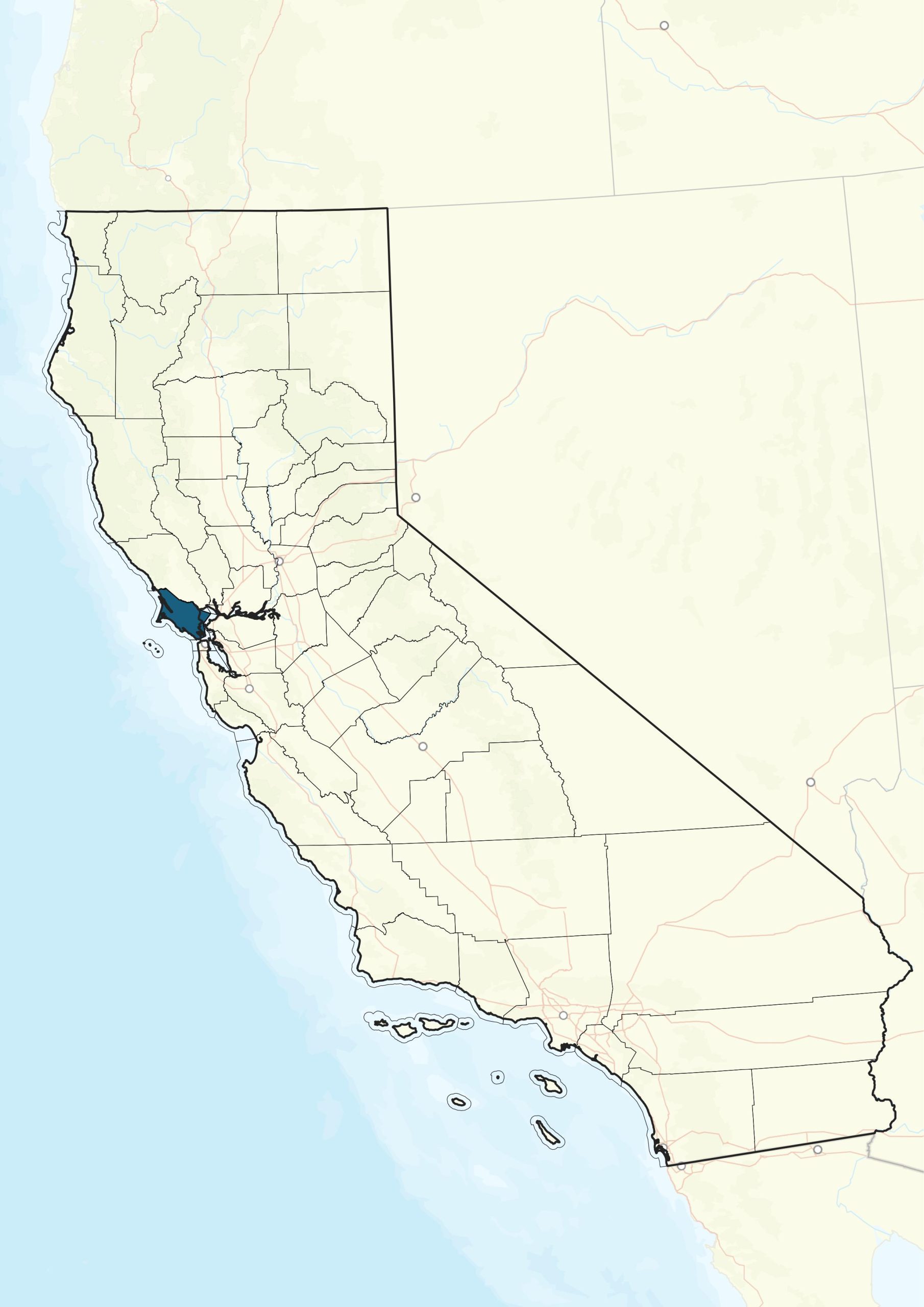
- Marin is a coastal county within a large metropolitan region. Developing a biomass economy means developing pathways that bridge urban and rural landscapes and that fit the scale and environmental sensibilities of the population.
- This Project integrates economic support for wildfire safety programs with growth of a lower-carbon economy. The Study integrates greenhouse gas analysis into consideration of where biomass is, where it gets transported, how it is transformed into products, and how bio-products get used. It also estimates the greenhouse gas savings of its wildfire prevention program.
- The vision being pursued is an economy that pairs technology-based and nature-based greenhouse gas solutions, as well as creates new green-collar and high-road job opportunities. It also is meant to support achievement of the goals of Senate Bill 1383, as well as compliance opportunities for jurisdictions.
In this sense, Marin offers a potentially transferrable blueprint for other densely populated, coastal counties and insights for developing an economy that can jointly support wildfire safety, landfill diversion, and climate resilience.
For policy makers, the project provides a data-driven framework to facilitate multi-agency cooperation and strategic public investment, estimated at approximately $29 million, to de-risk these sustainable technologies. Ultimately, the project seeks to align biomass management with Marin’s climate action goals, ensuring that organic materials are used to their highest potential while bolstering the county’s resilience against wildfire and environmental degradation.
Key Takeaways
The Marin Biomass Study has provided the following outputs and insights:
- A framework for economic development biomass recovery, aggregation and utilization. Pathways that create a nexus for wildfire safety, landfill diversion, and climate resilience. A management regime that combines technology-based and nature-based carbon solutions.
- Estimates of Marin’s expected biomass flows over the next decade and a model of its current biomass management system.
- Proof of concept for growth of new system of biomass pathways. A blueprint for a biomass economy that can synergistically produce energy resources, renewable electricity, wood products, fertilizers, soil amendments, and carbon solutions.
- Estimates of greenhouse gas savings from Marin’s wildfire safety programs.
- Estimates of greenhouse gas savings from alternative economic uses of biomass from wildfire prevention and landfill diversion programs.
- Evidence to support expansion and development of the following biomass pathways: composting, co-digestion, small-scale milling, pyrolysis, and gasification, as well as building deconstruction with lumber reuse and additional source separation and recovery of woody construction and demolition materials.
The Marin Biomass Collaborative is working toward the following outputs and insights:
- Business models and project development plans for each of the recommended pathways.
- Refined data estimates on biomass flows, supportive fundings needs, and projected net revenues from the following pathways: expanded composting for wildfire-related green materials; scaling up food scrap co-digestion at wastewater plants; restarting small-scale milling for large-diameter logs; developing local pyrolysis to produce biochar from wastewater digestate and woody biomass from fuel treatment; and gasification of mixed woody materials to produce biochar and renewable electricity.
- Shared goals and long-term commitments among public agencies. A shared biomass recovery and utilization platform upon which private-sector activity can thrive.
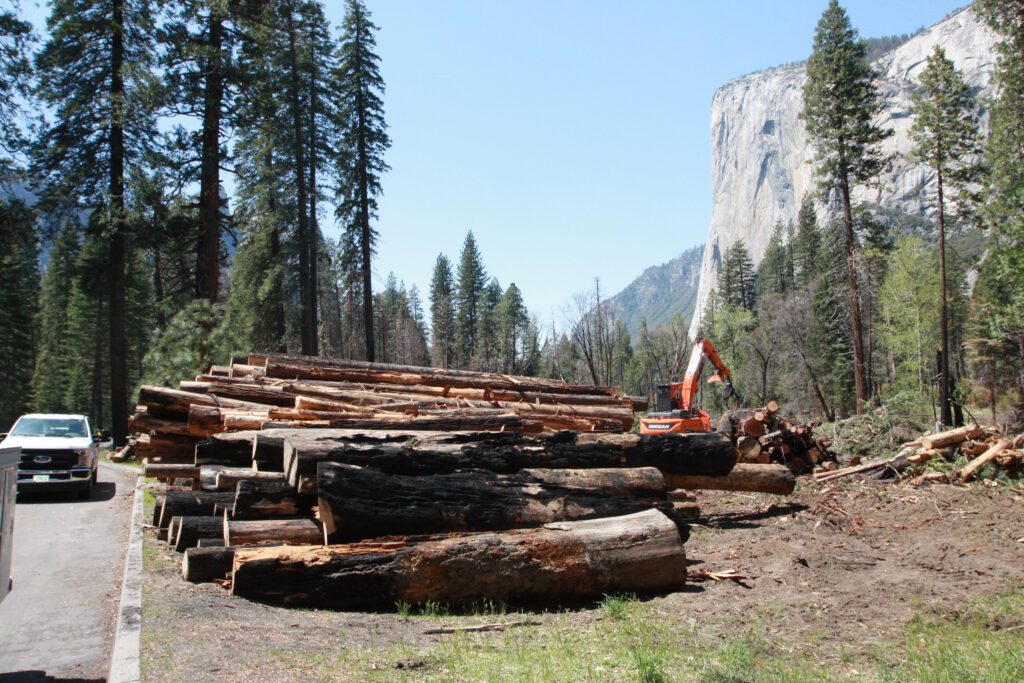
Fun fact: what we do with biomass from wildfire prevention matters just as much for reducing greenhouse gases as the wildfire prevention program itself. (That is, our study finds that the greenhouse gas savings from management of biomass into better utilization pathways are as big, if not bigger, than the greenhouse gas savings from preventing forest wildfires.)
Challenges
The following barriers have prevented this new economy from emerging:
- Practices based on waste management rather than resource recovery.
- A lack of shared vision for biomass recovery, aggregation, and utilization.
- A distribution of responsibilities among public agencies that create gaps in understanding and institutional action. An inability to see the big picture.
- Inadequate funding for biomass recovery and use of biomass to create fundamental goods and products like energy resources, renewable electricity, fertilizers, and soil amendments.
Next Steps
Forming teams and actions plans to advance individual pathways, while also creating coordination points that assure synergies across pathways.
Building business models and funding strategies for individual projects.
Pursuing data management and tracking systems to make more real-time data available for economic actors and public decision makers.
Status
In five years we hope that Marin has diversified its local biomass economy, is recovering over half of its previously landfilled or exported biomass, and its putting these materials to their highest and best uses locally.
We hope that Marin is able to report on the greenhouse gas reductions achieved individually and collectively for the recommended pathways.
We hope that Marin is transferring insights from its Project to help other counties accelerate development of a lower-carbon and more regenerative uses of biomass.
We hope that Marin is part of a growing regional bio-economy that supports green-collar and high-road jobs and that increases energy independence and carbon neutrality.
Team Members
Project Steering Committee
- Organizing for Action Marin – Barbara George
- Ecologically Sound Practices Partnership – Belle Cole (chair)
- Sustainable San Rafael – Bill Carney
- Marin Wildfire Prevention Authority – Bruce Goines
- UC Davis, Biological and Agricultural Engineering – Bryan Jenkins
- Carbon Cycle Institute – Jeff Creque
- Marin Conservation League – Larry Minikes
- Zero Waste Marin – Meilin Tsao (liaison from Zero Waste Marin)
- CDW LLC – Chad White (project manager)
Consultants
- CDW LLC (framework lead, project management)
- Spatial Informatics Group (GHG analysis, project management)
- TSS Consultants (biomass flow analysis, technology and financial evaluations)
- Wildephor Consulting Services LLC (technology and financial evaluations)
- CLERE Inc (public entity analysis)