Region Five
Tahoe Central Sierra
Jump To
Point of Contact
Headwaters Environmental Inc.
Regine Miller
regine.miller3@gmail.com
Lead
Placer County Water Agency
Tony Firenzi
tfirenzi@pcwa.net
Co-Facilitators
Placer County Regional Forest Health Division
Kerri Timmer
ktimmer@placer.ca.gov
Mission
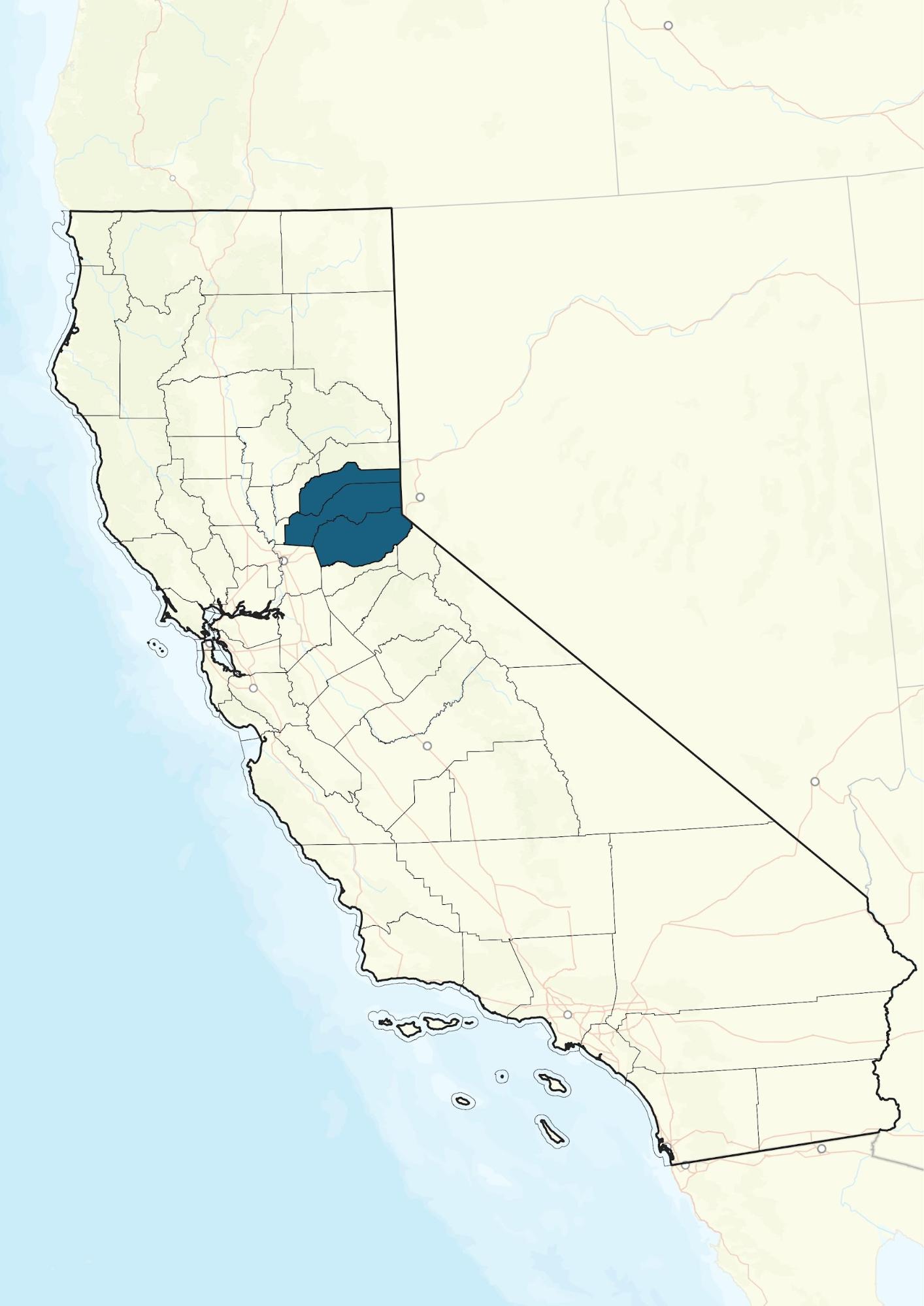
The mission of the Tahoe Central Sierra Pilot Project (TCSPP) is to help create a financially sustainable wood utilization market to support ecological forest health and community fire resilience across Nevada, Placer and El Dorado Counties and to coordinate and advance forest health activities within the region. To achieve this, the counties are formalizing a collaborative framework to take joint action on forestry issues.
The TSCPP has the advantage of closest proximity to a major metropolitan area, the Sacramento-Roseville-Folsom, CA Metro Area, an area with 2.420 million persons and giving it better labor and capital generation potential. It also retains established biomass hubs at Rocklin (Rio Bravo) and Lincoln (SPI).
Key Takeaways
A diverse array of stakeholders expressed consensus support for improved coordination on biomass and wildfire resilience-related issues through formation of a regional framework. While city governments, special districts, non-profit organizations, and numerous other entities provide localized expertise in these areas, county governments in the region are best equipped to lead this effort given their authorities and available resources to manage interagency partnerships and a comprehensive biomass initiative. The county governments will conduct their initial efforts under a Memorandum of Association but may, in the future, desire to enter into a Joint Powers Authority.
Challenges
In recent years, local governments within Nevada, Placer and El Dorado counties have taken proactive approaches to setting policies and managing for wildfire risk mitigation, ecological forest health, and biomass utilization within their respective jurisdictions. However, unlike local governance, forest and community wildfire resilience are cross-boundary issues requiring coordinated action. This geographic mismatch left a “governance gap,” where the fragmented nature of local decision-making and programs could not match the landscape-scale reality of fire behavior or the complexities of biomass markets. Until now, the region lacked a framework under which the three counties could to bridge these gaps and work jointly on forestry and biomass related issues.
Next Steps
- Pursuit of implementation funding to fund joint actions under the MOA: January 2026 – Ongoing
- Governing boards’ approval of the MOA: February 2026
- Tri-county BDO Zone Connect Webinar and industry press release: March 2026
- Analysis of the use of an Enhanced Infrastructure Financing District to fund biomass and other fire management techniques: March 2026
- Implementation of the MOA including: 1) Joint marketing of the BDOZ ratings to attract bioeconomy investment to the region; 2) Information-sharing about wildfire resilience activities to support a coordinated regional approach; 3) Pursuit of joint funding opportunities to advance regional biomass initiatives; 4) Coordination of advocacy efforts on land management and biomass policy; 5) Promotion of biomass utilization infrastructure, and 6) Protection of vital water infrastructure supplying a large portion of California: mid-2026 and beyond.
Status
Nevada, Placer and El Dorado Counties have launched a regional strategy to reduce forest fuels and catalyze a sustainable bioeconomy under a Joint Memorandum of Association for Wildfire Resilience and Forest Biomass Residue Management. The tri-county partnership will continue to coordinate and implement the agreed upon actions under the framework to the extent possible. The Counties may, in the future, desire to enter into a joint powers agreement and may elect to create a new, separate, Joint Powers Authority to implement this and potentially other work.
Team Members
Core Team
- Placer County Water Agency – Tony Firenzi, Director of Strategic Affairs
- Placer County – Kerri Timmer, Regional Forest Health Coordinator
- CLERE Inc – Christiana Darlington, Attorney
- MNJ Advisors – Michael Luken, Owner
- Headwaters Environmental Inc. – Regine Miller, Owner
Consultants
- Economic & Planning Systems Inc.
- Ecostrat
Past Core Team Members (in prior rounds of funding)
- Camille Swezy, Mule Ears Consulting
- Clarke Stevenson, The Watershed Research & Training Center
- Karen Quidachay, Landmark Environmental Inc.
- Catherine Silvester, Point View Environmental