Region Four
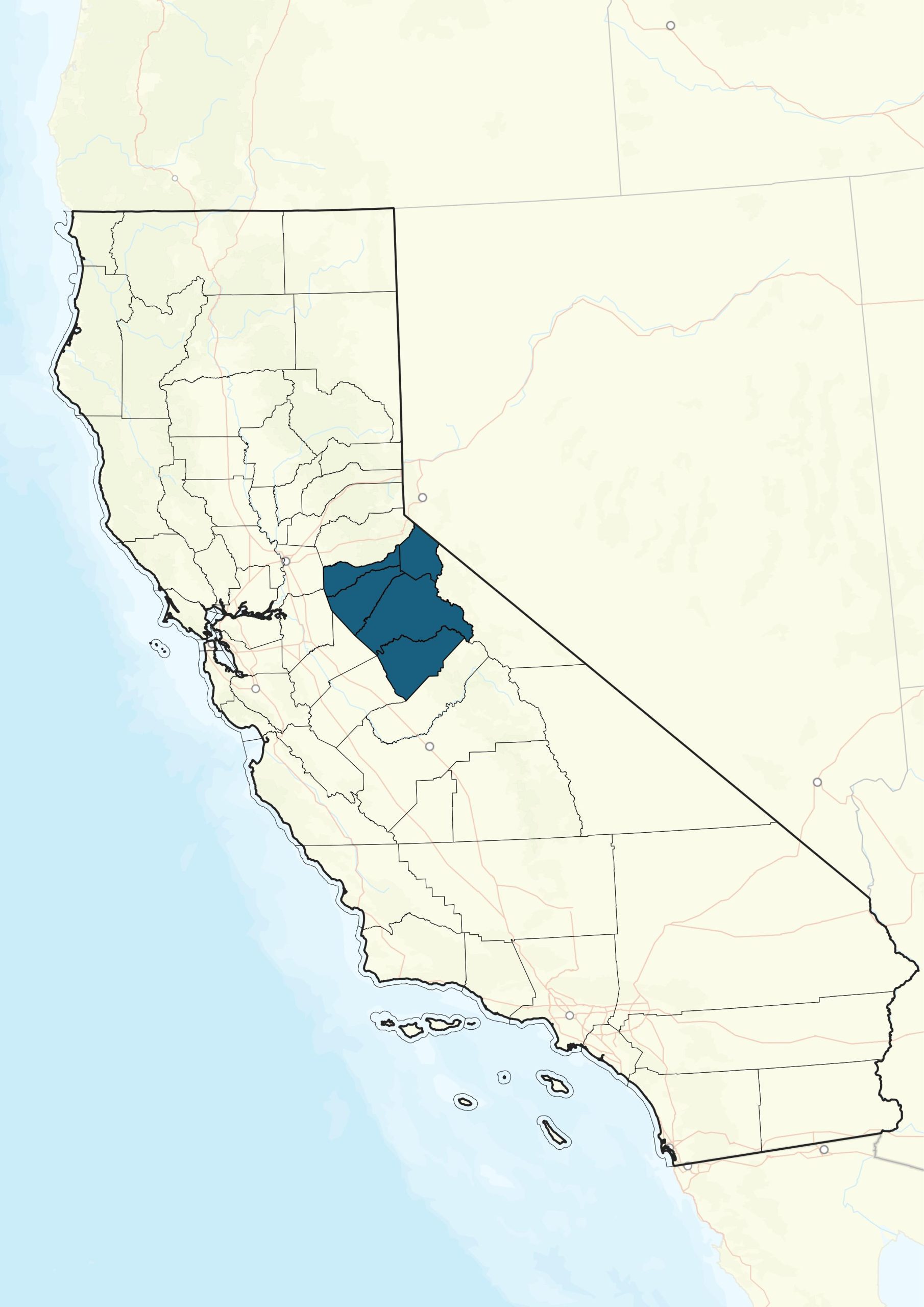
South Central Sierra
Jump To
Lead
Mariposa County Resource Conservation District (MCRCD)
Point of Contact:
Melinda Barrett, Executive Director, MCRCD
barrett.melinda1@gmail.com
Co-Facilitators
Central Sierra Economic Development District
Mission
Advance statewide goals while focusing on improving workforce and vegetation contractor capacity. Additionally, the project team furthered research on the role community service districts can play on the issue of feedstock contract management.
This pilot region is shaped by (1) extensive conifer forestland and woodland across nearly 3.9 million acres, (2) significant recent wildfire impacts (over 625,000 acres affected from 2013–2022 fires over 10,000 acres), and (3) a workforce market where demand for fuels reduction and restoration work outpaces supply. To support our work, MCRCD retained TSS Consultants to examine workforce and infrastructure conditions across five counties and identify barriers to entry for contractors interested in harvesting, collecting, processing, and transporting woody feedstock. Findings focus on encouraging small enterprise development while exploring strategies that link forest health work to stable employment pathways, including training pipelines, financing tools, and longer-term contracting approaches.
Key Takeaways
The Central Sierra has strong potential to support a robust fuels reduction and restoration workforce, but growth is constrained by contract length, financing barriers, procurement complexity, and recruitment challenges.
Key takeaways include:
- Contractors commonly operate small crews (often 3-5 employees) and rely on expensive specialized equipment; this makes stable workflow and predictable contracts essential for expansion.
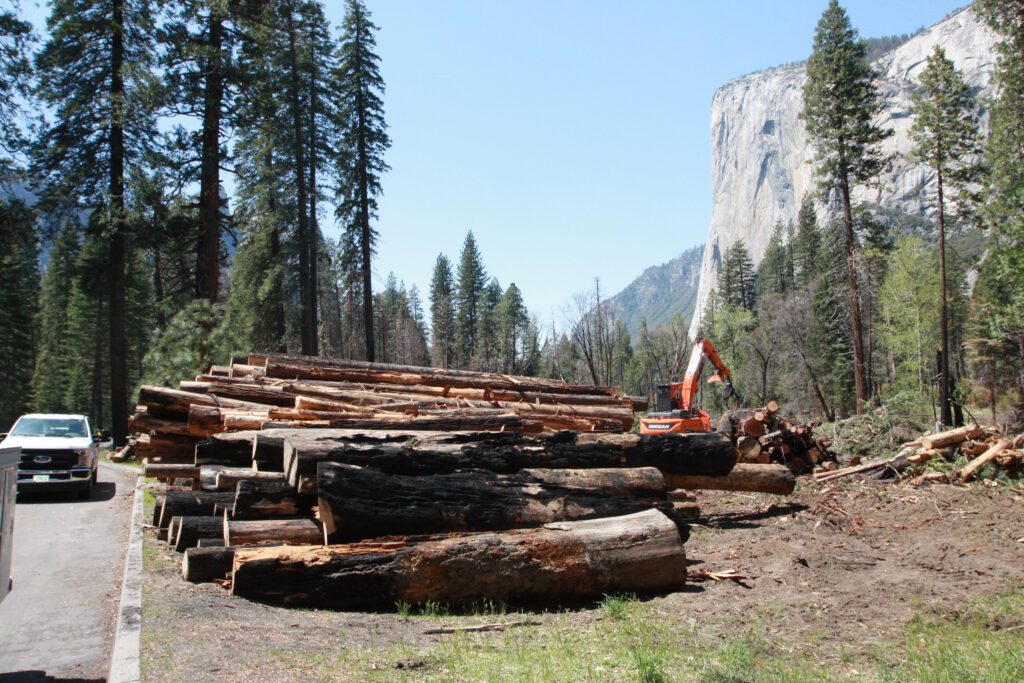
- Transportation is a major chokepoint: moving equipment and hauling biomass can be costly and constrained by limited “low-bed” transport availability and driver shortages.
- Tribal workforce and training partnerships are already a regional strength, including programs that build capacity for tribal members to access restoration contracts and grow local stewardship.
- The most effective path to scaling implementation is combining training pipelines + better contracting structures + accessible capital + clear bid visibility.
Challenges
Key barriers identified include:
- Lack of consistent workflow (seasonality, grant cycles, short-term contracts)
- Difficulty accessing bid opportunities and procurement systems (e.g., SAM.gov complexity, inconsistent bid distribution lists, bundled projects, qualification thresholds)
- High equipment start-up costs and limited financing options (reimbursement-based grants, SBA requirements, limited fit of loan guarantee programs for small contractors)
- Workforce recruitment challenges (training access, physical demands, wage competition with other industries, housing shortages in rural areas)
- Transportation bottlenecks (low-bed hauling waitlists, driver shortages, economically unsustainable haul costs without subsidies)
Next Steps
Policy/implementation recommendations include expanding longer-term service contracts, scaling education/training capacity (including community college models and tribal workforce programs), flexible capital or equipment share models, and elevating wage standards to compete with other sectors. Additional analysis explored local public entity roles, governance options, and organizational structures to support forest biomass markets and contracting at scale (CLERE, 2023; ERG, 2025).
Status
The Central Sierra pilot established a clear roadmap for growing forest restoration workforce capacity by identifying the practical barriers contractors face and the policy and program changes that can unlock expansion. The region is positioned to translate major state and federal investments in forest health into sustained local jobs and business growth, particularly by strengthening training pipelines, improving procurement access, and expanding contract terms that support equipment investment and long-term employment.
Team Members
Core Team
- Mariposa County Resource Conservation District (MCRCD) – Melinda Barrett, Executive Director, Grantee and regional lead.
- Central Sierra Economic Development District (CSEDD) – Alex Bloom, Economic Development Manager, Project management and co-facilitator.
Consultants
- TSS Consultants – Technical analysis and feasibility.
- CLERE, Inc. – Governance and institutional analysis.
- ERG (Economic & Planning Systems / ERG) – Organizational strateg.y
- Wildephor – Wood product feasibility planning.